
HAPPENING
Phuket’s turquoise waters and vibrant marine life are the heart of its beauty, but these ecosystems are currently facing a silent crisis. Every year, millions of tons of plastic enter our oceans, impacting over 700 species. As a traveler, the ocean’s future starts with your choices. Understanding the impact of waste is the first step toward preserving the Andaman Sea for generations to come.
The Plastic Diary: Why "12 Minutes" Matters
The average lifespan of a plastic bag in a human's hand is just 12 minutes, yet its journey in the ocean can last for 20 to 500 years. Unlike organic waste, plastic never truly disappears. It simply breaks down into smaller, more toxic fragments known as microplastics.
- The Breakdown: Sunlight (UV), waves, and chemical erosion cause large items to crumble. While they get smaller, they never actually leave the environment.
- A Trillion Bags: Globally, we use 1 trillion plastic bags every year, which is an average of 2 million bags every single minute.
- The Lifespan of Waste: A simple straw or plastic cup can survive in the ocean for up to 450 years, while fishing lines can last for 600 years
Why Plastic Bags are Deadly to Marine Life
Plastic bags are among the most lethal forms of pollution because they utilize a "deadly disguise" in the water. For sea creatures like turtles and whales, a floating bag mimics the movement and light refraction of a jellyfish, their favorite meal.
- The Full Stomach Trap: Plastic stays in the animal's stomach, making them feel "full" until they eventually starve.
- Floating Syndrome: For sea turtles, trapped gas from ingested plastic prevents them from diving to hunt or hide from predators.
- The Scent of Death: Plastic in the sea grows algae that smells like Dimethyl Sulfide (DMS). This is the exact scent animals use to find food, tricking them into eating trash even if they cannot see it.
Suffocation: Bags block breathing passages and digestive systems, leading to a long and painful death for over 90% of seabirds and 1/3 of sea turtles.
The Human Impact: Bioaccumulation
The ocean's plastic problem is ultimately a human health problem. Microplastics (plastic pieces smaller than 5mm) act as "toxic magnets," soaking up heavy metals and poisons in the seawater. Through a process called Bioaccumulation, these toxins move up the food chain.
- The Chain: Plankton and small fish ingest microplastics. Big fish then eat those small fish, causing the chemical concentration to become even stronger.
- The End Result: Humans eat the big fish, meaning we eventually consume those microplastics and hazardous chemicals into our own bodies.
- Global Reach: Microplastics are now found in the air we breathe, the snow on Mt. Everest, and even the deepest point of the Mariana Trench.
3 Ways to Travel Sustainably in Phuket
Making a difference doesn't require a total lifestyle change, it starts with mindful actions during your vacation.
- Bring a Reusable Bag: Avoid taking plastic bags from convenience stores.
- Choose Reef-Safe Products: Visit Boots or Watsons in The Botanica Zone at Jungceylon to find sunscreens and toiletries that do not contain harmful primary microplastics.
- Dispose Properly: Ensure all waste is placed in designated bins. Jungceylon provides clearly marked recycling points to help manage waste before it ever reaches Patong Beach.
Celebrate World Ocean Day 2026 at Jungceylon
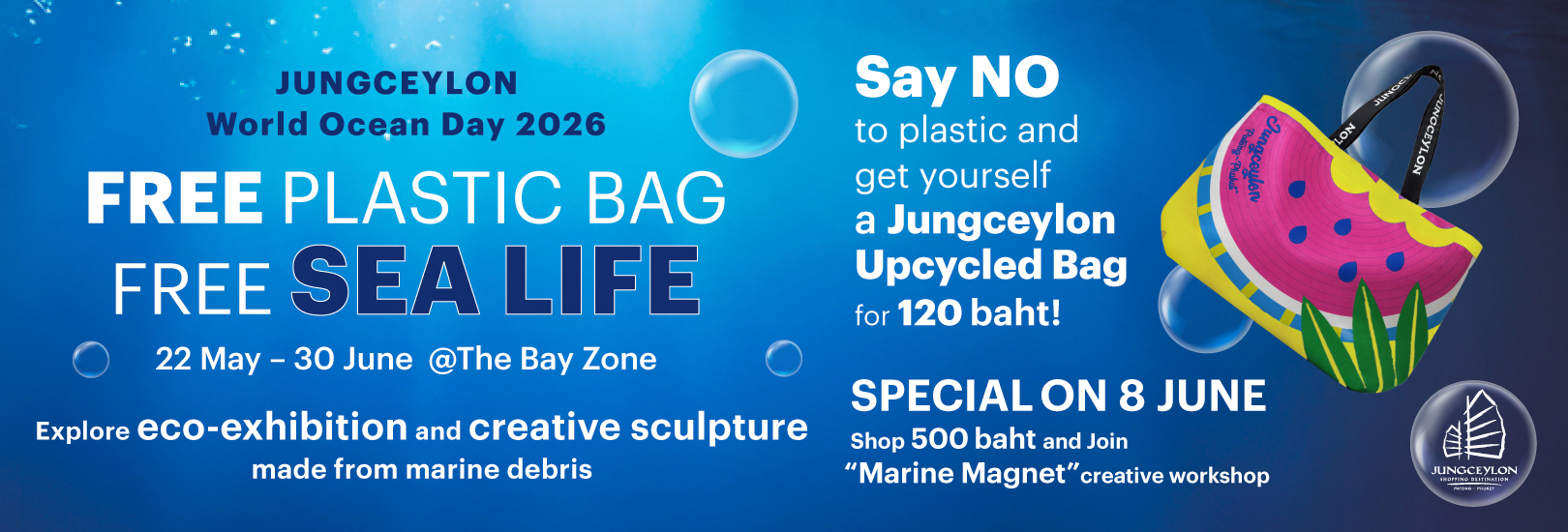
From May 22 to June 30, 2026, Jungceylon is hosting the “FREE PLASTIC BAG, FREE SEA LIFE” event at The Bay Zone. This campaign is designed to raise awareness and encourage sustainable shopping habits in the heart of Patong.
- Marine Debris Exhibition: Explore creative sculptures and an educational showcase made from marine debris, highlighting the "Ocean's Plastic Diary."
- Upcycled Fashion: Say "NO" to plastic and purchase a Jungceylon Upcycled Bag for only 120 Baht.
- Special Event (June 8): On World Ocean Day, shop for 500 Baht at any store in Jungceylon and join the “Marine Magnet” Creative Workshop to turn recycled materials into art.
Small Acts, Big Impact
The statistics are staggering. 11 million tons of plastic enter the sea annually, the equivalent of dumping one full garbage truck into the ocean every minute. However, through awareness and a commitment to reducing waste, we can protect the Andaman’s future. Join us at Jungceylon this May and June to learn, create, and shop responsibly. Together, we can ensure that "Free Plastic Bag" truly means "Free Sea Life."


